Skip to content
Doctor SEO

Blog

Posicionamiento web Paso a Paso
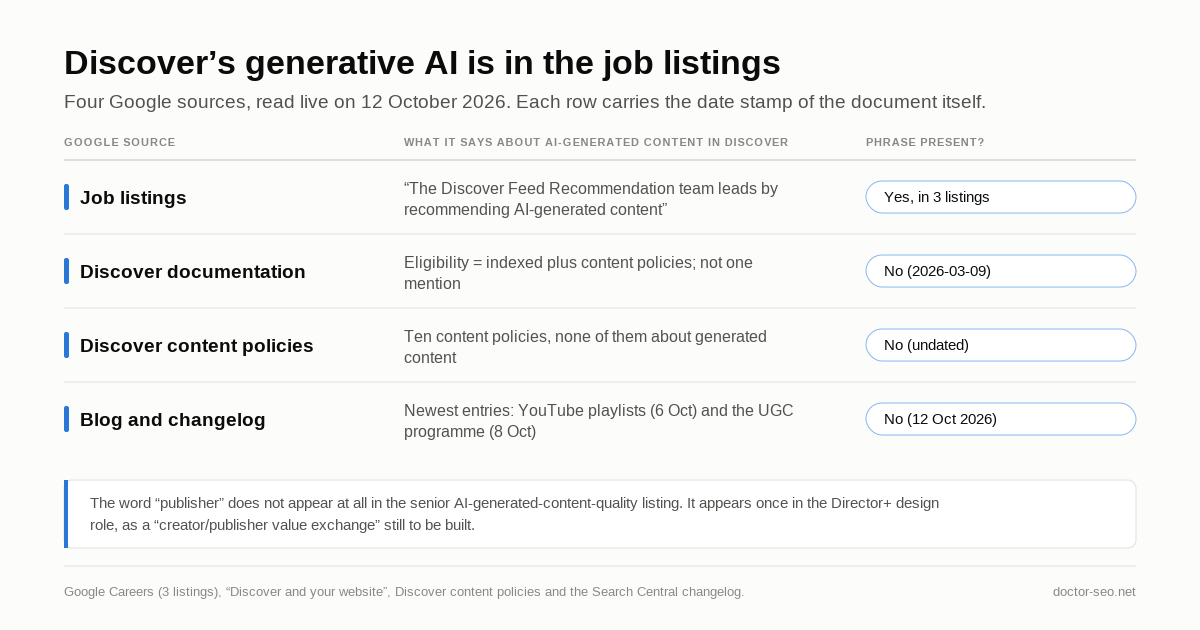
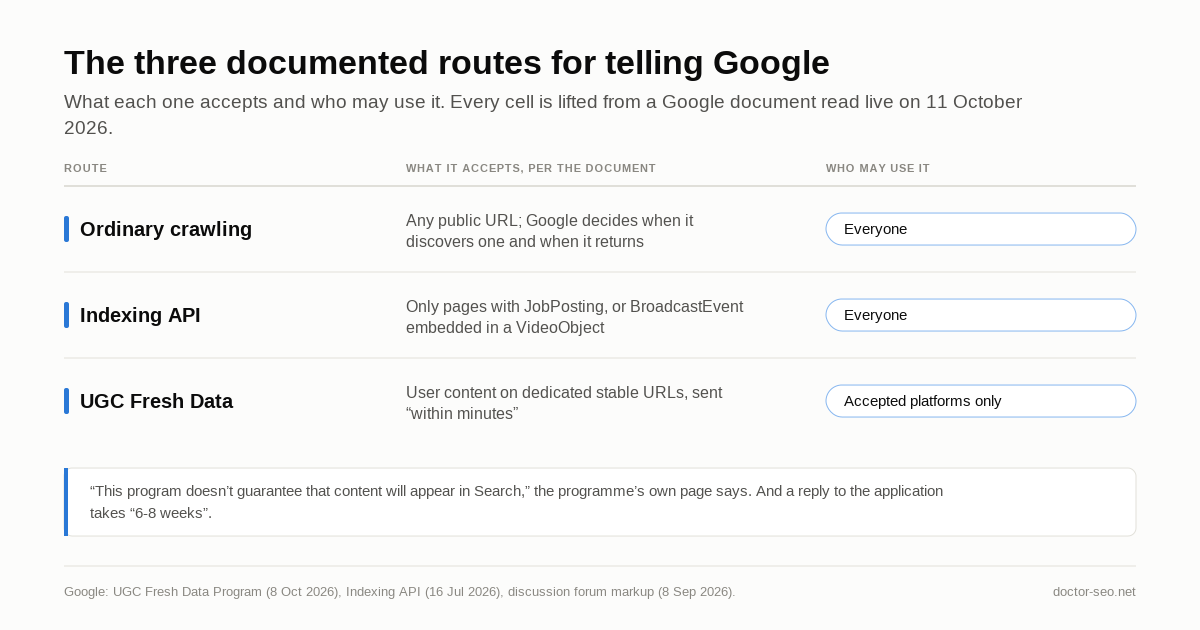
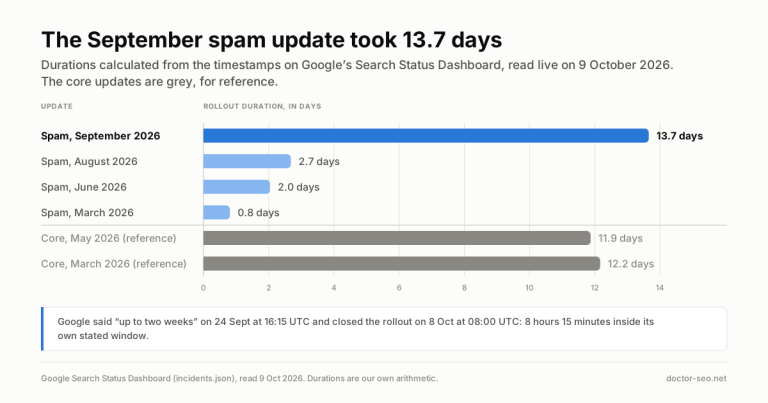
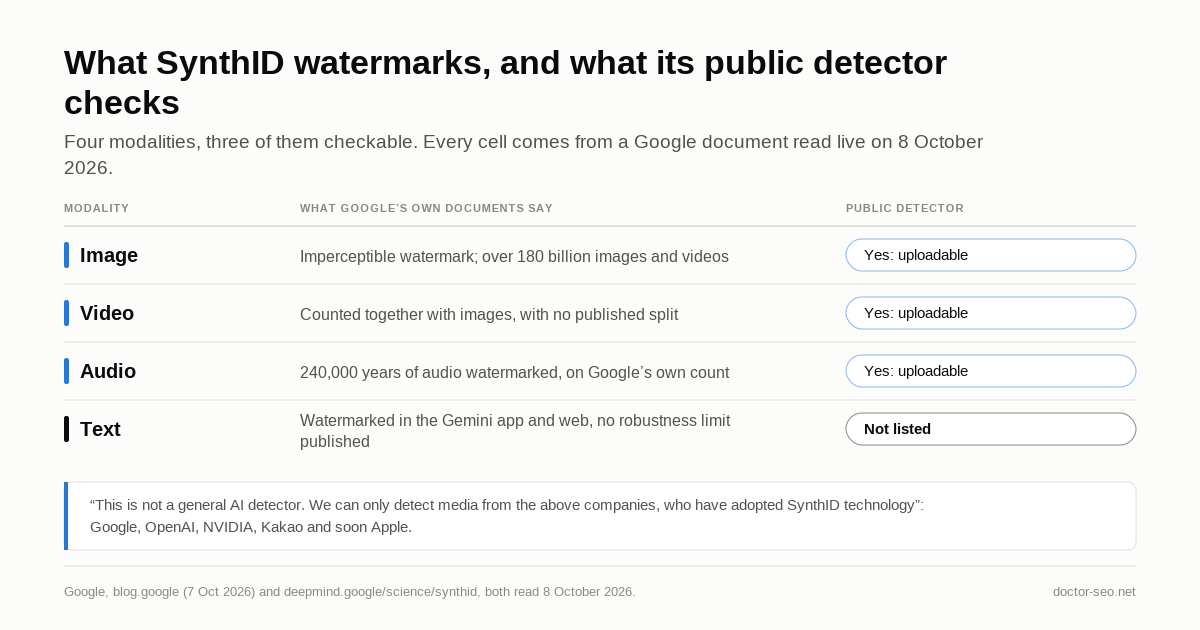
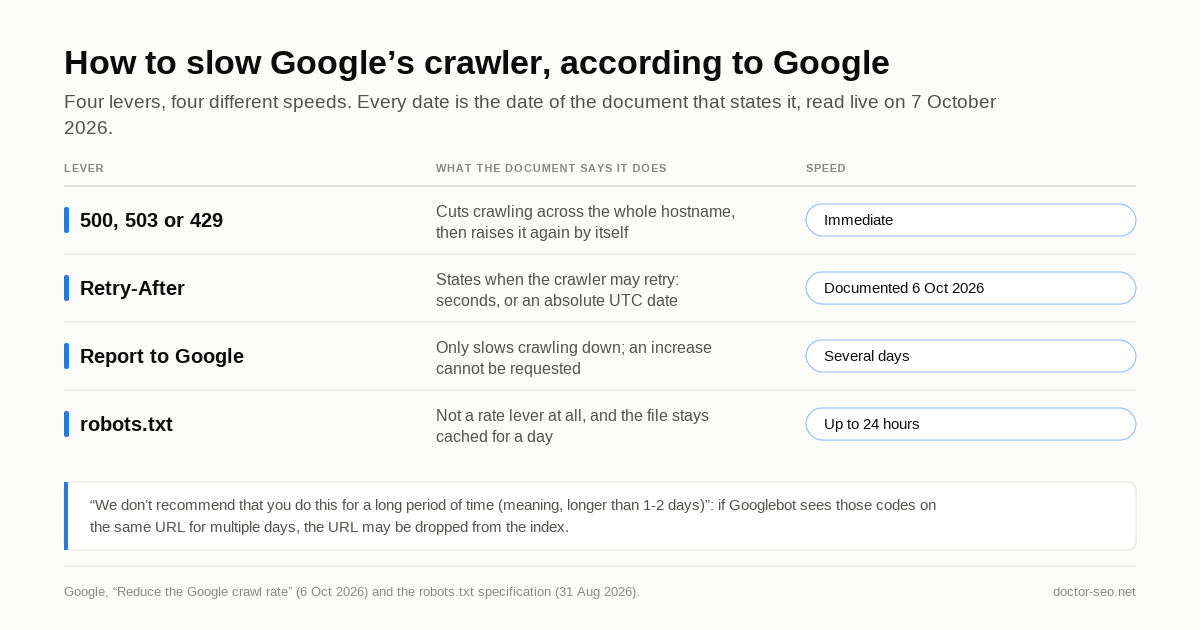
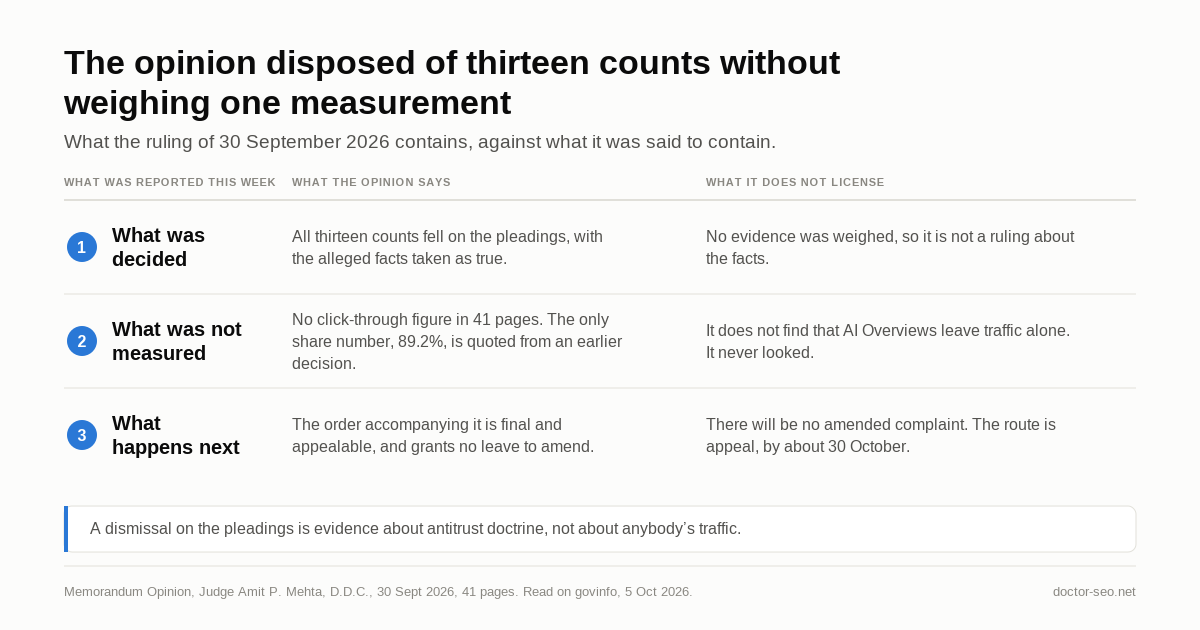
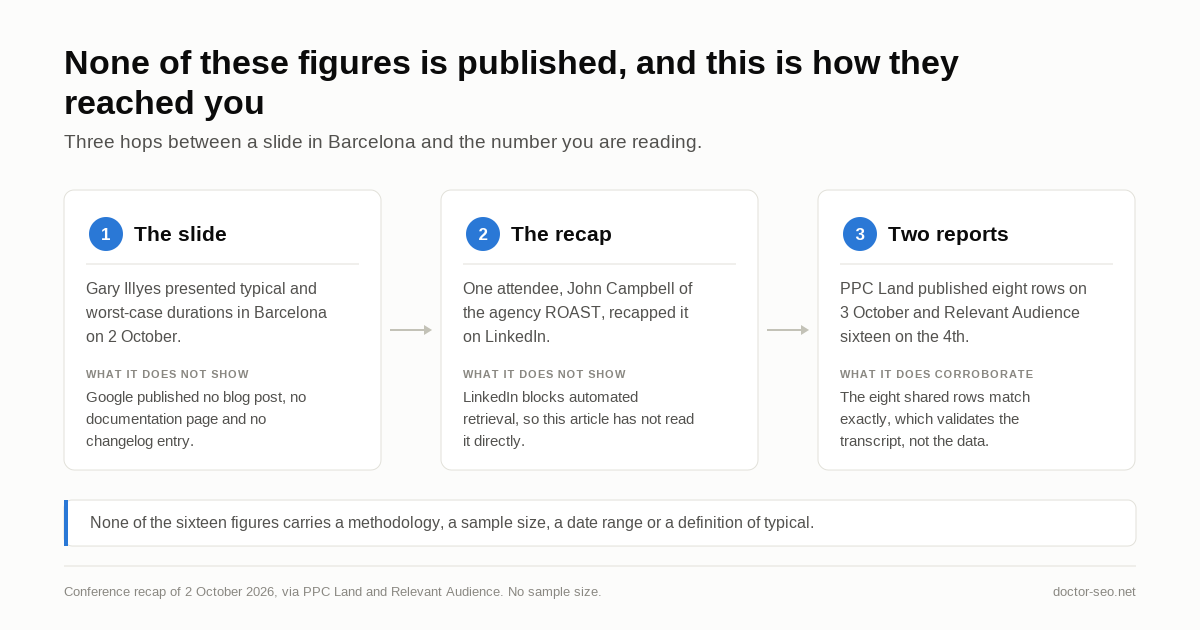
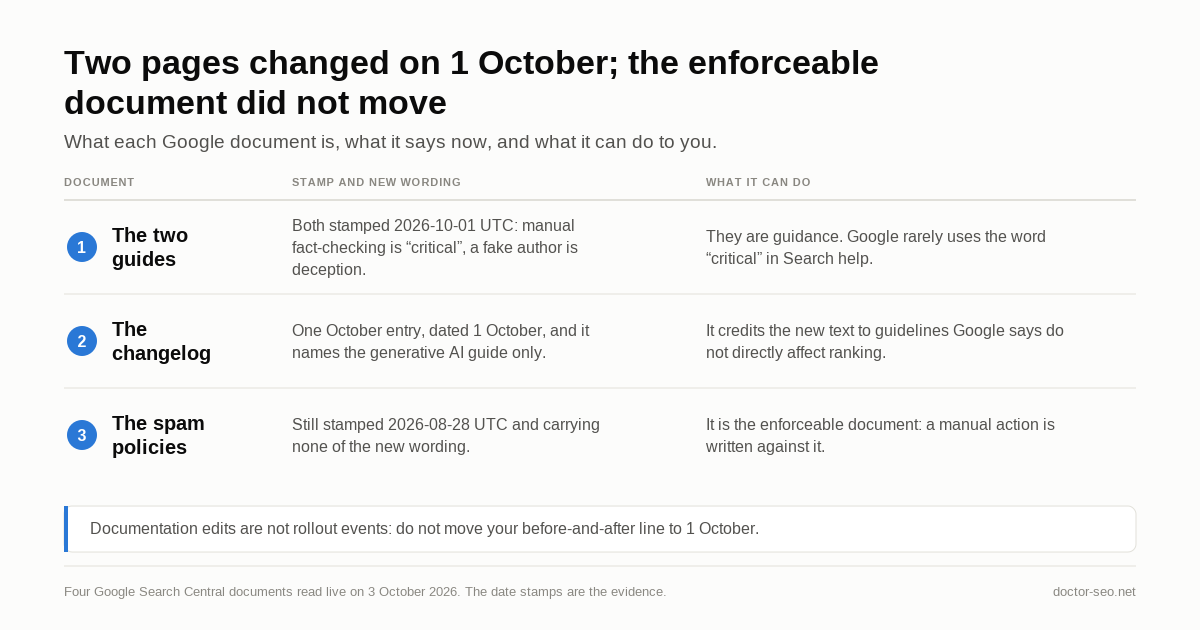
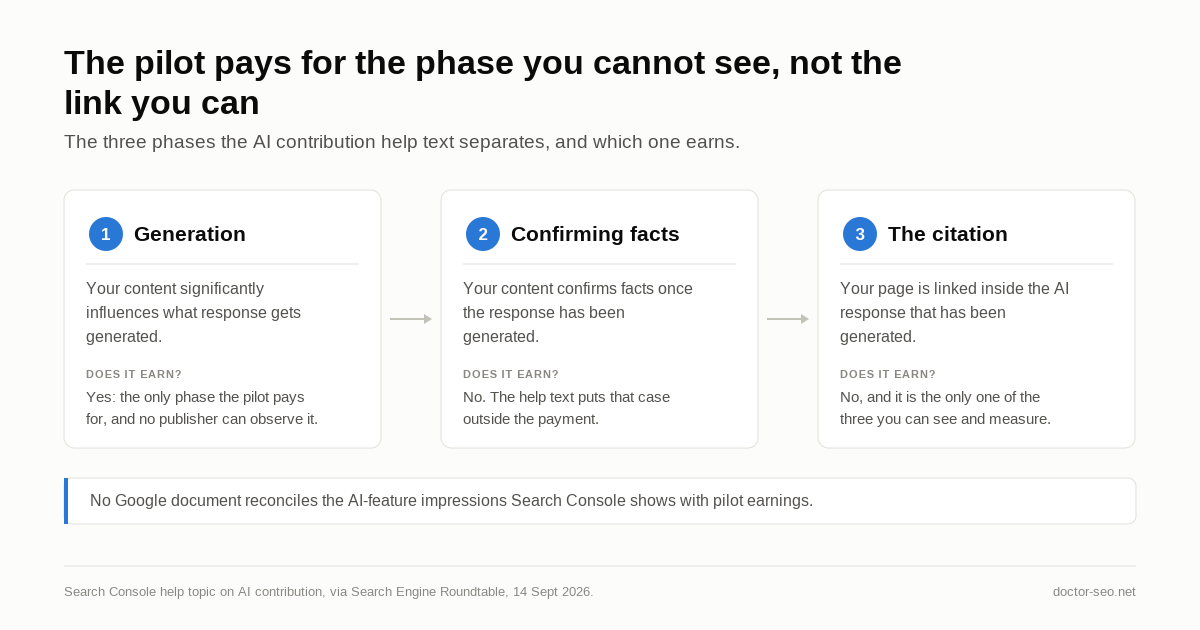
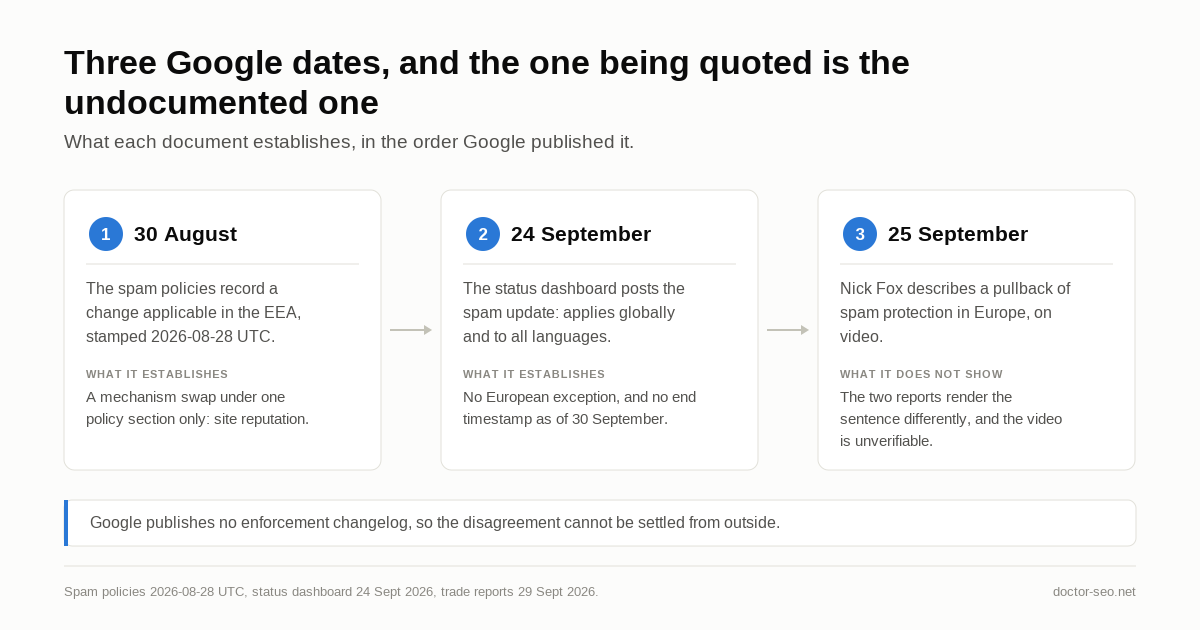
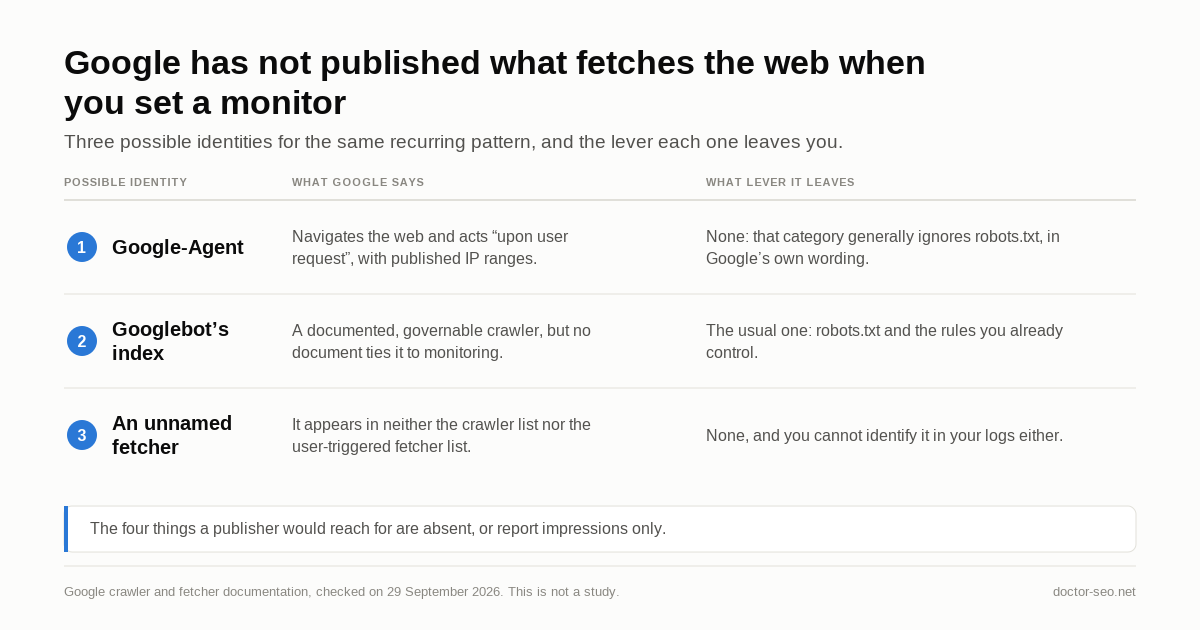
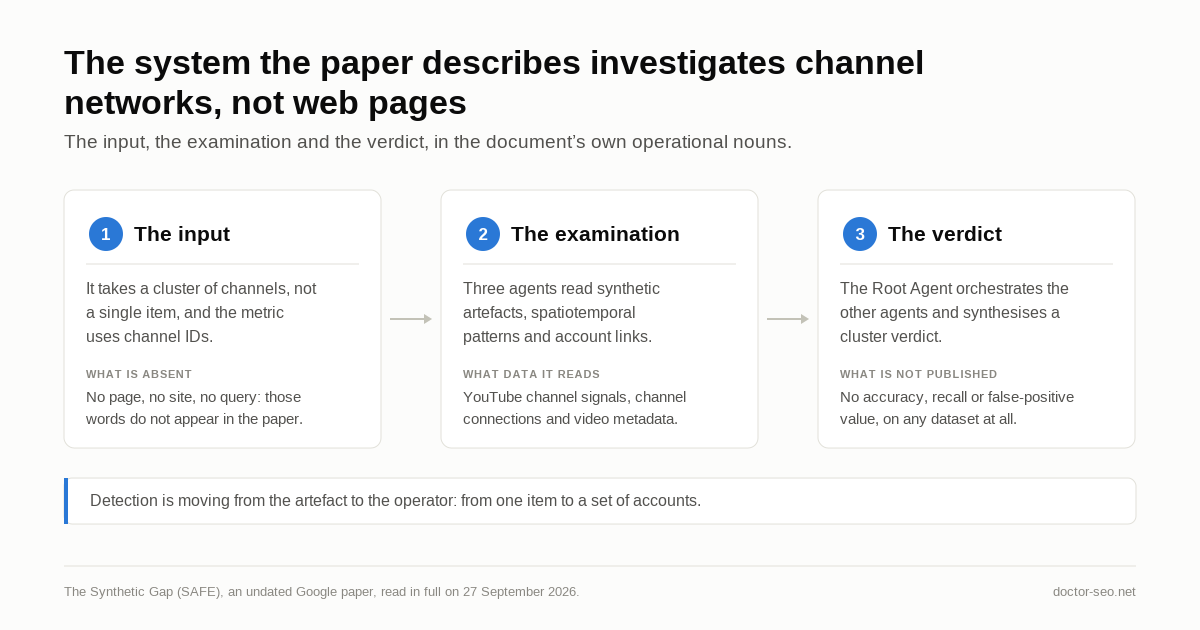
Four-row table. Google’s job listings say the Discover Feed Recommendation team leads by recommending AI-generated content, and the phrase appears in three listings. Google’s Discover documentation, last updated 9 March 2026, defines eligibility as being indexed and meeting Discover’s content policies, and does not mention AI-generated content at all. The Discover content policies page, which carries no last-updated date, names ten content policies and none of them concerns generated content. The Search Central blog and its documentation changelog, read on 12 October 2026, say nothing. News Google is hiring to generate AI content inside Discover Three Google job listings, read live on 12 October 2026, describe a Discover feed team whose work is recommending and quality-controlling AI-generated… 12 min read Three-row table. Ordinary crawling accepts any public URL and Google decides when it discovers one and when it comes back: open to everyone. The Indexing API accepts only pages carrying JobPosting, or BroadcastEvent embedded in a VideoObject, and is also open to everyone. The UGC Fresh Data Program accepts user content on dedicated stable URLs, sent within minutes, but only platforms accepted after an application may use it. News Google documents the UGC Fresh Data Program, and most sites cannot apply Google published documentation for the UGC Fresh Data Program on 8 October 2026, an ingestion pipeline for user-content platforms. What it requires,… 12 min read Horizontal bar chart of the rollout duration of the four 2026 spam updates, with the two core updates drawn as a muted reference. Algorithm Updates Google closed the September 2026 spam update after 13.7 days Google’s Search Status Dashboard closed the entry on 8 October at 08:00 UTC. Thirteen days, fifteen hours and forty-five minutes: the longest… 12 min read Four-row table. Image: imperceptible watermark, over 180 billion images and videos watermarked; uploadable to the detector. Video: counted together with images, with no published split; uploadable. Audio: 240,000 years of audio watermarked on Google's own count; uploadable. Text: watermarked in the Gemini app and web experience, with no robustness limit published, and not listed among what the public detector accepts. News Google Opens Its SynthID Detector to Everyone: Image, Video and Audio, Not Text Google opened the SynthID Detector on 7 October 2026. It takes image, video and audio, not text, which is the one modality… 12 min read Four-row table. Returning 500, 503 or 429 cuts crawling across the whole hostname and raises it again by itself: the effect is immediate. The Retry-After header states when the crawler may retry, in seconds or as an absolute UTC date, and was documented on 6 October 2026. Reporting the problem to Google through Search Console can only slow crawling down and takes several days. The robots.txt file is not a rate lever and stays cached for up to 24 hours. News Google documents Retry-After for slowing its crawler: what the page says and what it still does not Google added the Retry-After header to its crawl-rate reduction page on 6 October 2026. It also says that going past 1-2 days… 13 min read Three-row table comparing what was said about the ruling with what it contains. One, what was decided: all thirteen counts fell on the pleadings with the alleged facts taken as true, so no evidence was weighed and it is not a ruling about the facts. Two, what was not measured: there is no click-through figure in 41 pages, and the only share number, 89.2%, is quoted from an earlier decision, so it does not find that AI Overviews leave traffic alone, because it never looked. Three, what happens next: the order accompanying the opinion is final and appealable and grants no leave to amend, so the route is appeal. News A judge dismissed the AI Overviews antitrust suits. What the opinion actually says On 30 September 2026 Judge Amit P. Mehta dismissed all thirteen counts Chegg and Penske Media had brought against Google over AI… 13 min read Three-step diagram of how Google's crawl and index timings reached the reader. One, the slide: Gary Illyes presented typical and worst-case durations in Barcelona on 2 October 2026, and what it does not show is anything published, because Google published no blog post, no documentation page and no changelog entry. Two, the recap: one attendee, John Campbell of the agency ROAST, recapped it on LinkedIn, and what it does not show is a first-hand reading, because LinkedIn blocks automated retrieval and this article has not read it directly. Three, two reports: PPC Land published eight rows on 3 October and Relevant Audience sixteen on the 4th, and what it does corroborate is that the eight shared rows match exactly, which validates the transcript and not the data. None of the sixteen figures carries a methodology, a sample size, a date range or a definition of typical. SEO Trends Google Read Out Its Own Crawl and Index Timings Gary Illyes presented Google internal crawling, indexing and serving timings in Barcelona. Google has published none of the figures, so we checked… 15 min read Table of the three kinds of Google document involved in the change of 1 October 2026. One, the two guides: both stamped 2026-10-01 UTC, they say manual fact-checking is critical and that a fake author is deception, and they are guidance, since Google rarely uses the word critical in Search help. Two, the changelog: one October entry, dated 1 October, naming the generative AI guide only, and it credits the new text to guidelines Google says do not directly affect ranking. Three, the spam policies: still stamped 2026-08-28 UTC and carrying none of the new wording, and that is the enforceable document, the one a manual action is written against. Documentation edits are not rollout events. News Google Now Tells You to Fact-Check Every Line of AI Content Google changed two Search documentation pages on 1 October 2026: fact-check all AI content, and stop inventing authors. What changed, and what… 14 min read Three-phase diagram of what Google's AI contribution pilot pays for, according to its own help text. One, generation: your content significantly influences what response gets generated, and this does earn, although it is the only phase the pilot pays for and no publisher can observe it. Two, confirming facts: your content confirms facts once the response has been generated, and this does not earn. Three, the citation: your page is linked inside the AI response that has been generated, and this does not earn either, although it is the only one of the three you can see and measure. News Google is paying ~100 publishers for AI answers. Nobody can read the rules Google is paying about 100 publishers for content that feeds its AI answers. The rules of the programme live in one document… 15 min read Three-date diagram of what Google has documented about the European spam pullback, in the order it was published. One, 30 August: the spam policies record a change applicable in the European Economic Area, stamped 2026-08-28 UTC, establishing a mechanism swap under one policy section only, site reputation. Two, 24 September: the status dashboard posts the September spam update, which applies globally and to all languages, with no European exception. Three, 25 September: Nick Fox describes a pullback of spam protection in Europe on video, which does not establish a verifiable quotation. News Google Pulled Back Spam Protection in Europe: What’s Documented and What Isn’t Nick Fox says Google pulled back spam protection in Europe. Four Google documents checked on 30 September 2026: only one records it,… 14 min read Table of the three possible identities of the recurring fetch that serves AI Mode monitoring. One, Google-Agent: it navigates the web and acts upon user request, with published IP ranges, and leaves no lever, because that category generally ignores robots.txt in Google’s own wording. Two, Googlebot’s index: a documented, governable crawler, but no document ties it to monitoring. Three, an unnamed fetcher: it appears in neither the crawler list nor the user-triggered fetcher list, leaves no lever, and cannot be identified in your logs. News Google AI Mode Now Monitors the Web for Everyone: What Changes for Your Site Google extended continuous AI Mode monitoring to every user. The feature appears in none of its help pages or crawler documentation, and… 14 min read Three-step diagram of the system the SAFE paper describes. One, the input: it takes a cluster of channels rather than a single item, and the accuracy metric is defined over a given set of channel IDs; the words page, site and query do not appear in the document. Two, the examination: three agents read synthetic artefacts, inorganic spatiotemporal patterns and inter-account linkages, over YouTube channel signals, channel connections and video metadata. Three, the verdict: the Root Agent orchestrates the other agents and synthesises a verdict on the cluster, and the paper publishes no accuracy, recall or false-positive value on any dataset. SEO Trends Google’s SAFE Paper Is About YouTube, Not Search Rankings Google published SAFE, a multi-agent forensic system for “AI slop”. The paper is about YouTube channels, not Search, and it carries no… 13 min read