Blog
Posicionamiento web Paso a Paso
News
Google Opens Its SynthID Detector to Everyone: Image, Video and Audio, Not Text
Google opened the SynthID Detector on 7 October 2026. It takes image, video and audio, not text, which is the one modality…
News
Google documents Retry-After for slowing its crawler: what the page says and what it still does not
Google added the Retry-After header to its crawl-rate reduction page on 6 October 2026. It also says that going past 1-2 days…
News
A judge dismissed the AI Overviews antitrust suits. What the opinion actually says
On 30 September 2026 Judge Amit P. Mehta dismissed all thirteen counts Chegg and Penske Media had brought against Google over AI…
 SEO Trends
Google Read Out Its Own Crawl and Index Timings
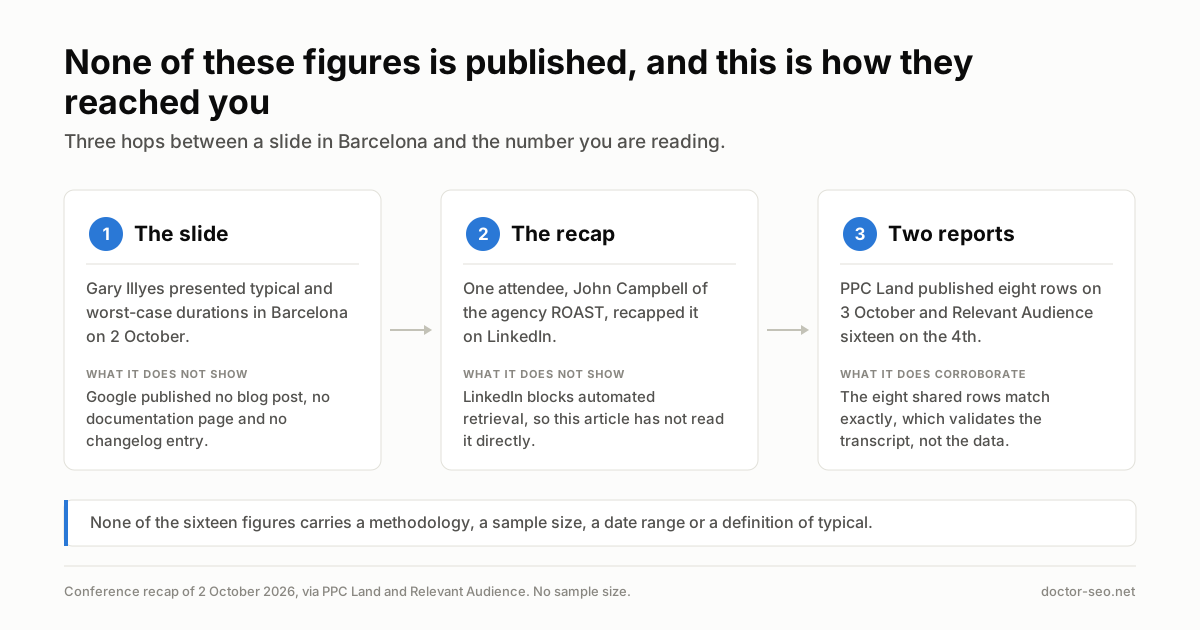
Gary Illyes presented Google internal crawling, indexing and serving timings in Barcelona. Google has published none of the figures, so we checked…
SEO Trends
Google Read Out Its Own Crawl and Index Timings
Gary Illyes presented Google internal crawling, indexing and serving timings in Barcelona. Google has published none of the figures, so we checked…
 News
Google Now Tells You to Fact-Check Every Line of AI Content
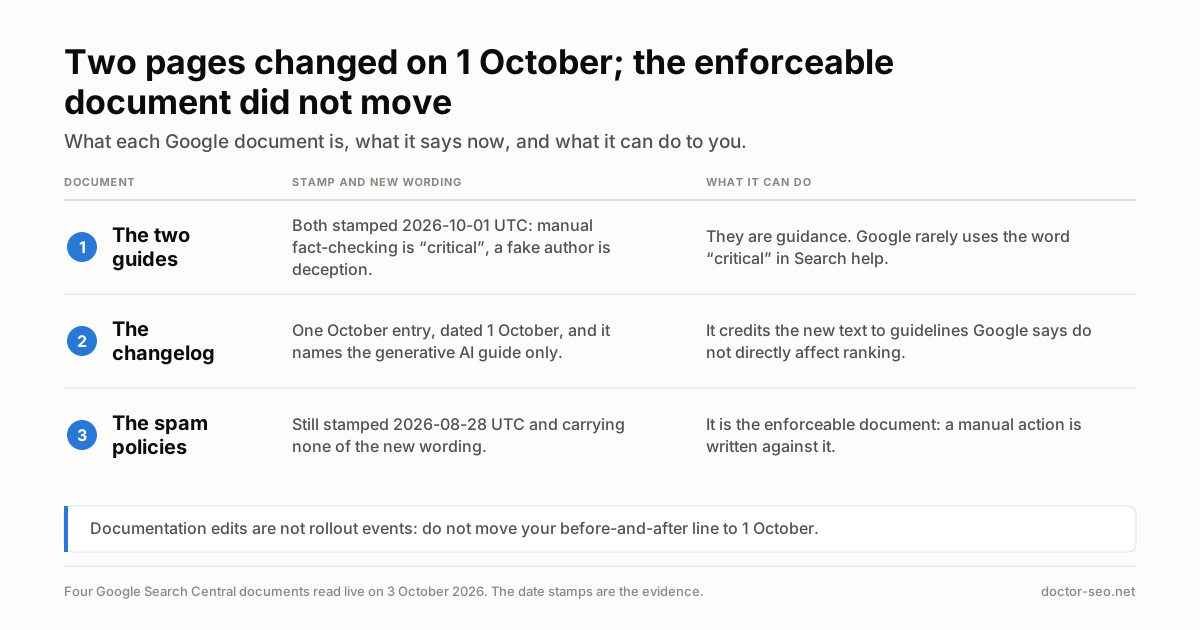
Google changed two Search documentation pages on 1 October 2026: fact-check all AI content, and stop inventing authors. What changed, and what…
News
Google Now Tells You to Fact-Check Every Line of AI Content
Google changed two Search documentation pages on 1 October 2026: fact-check all AI content, and stop inventing authors. What changed, and what…
 News
Google is paying ~100 publishers for AI answers. Nobody can read the rules
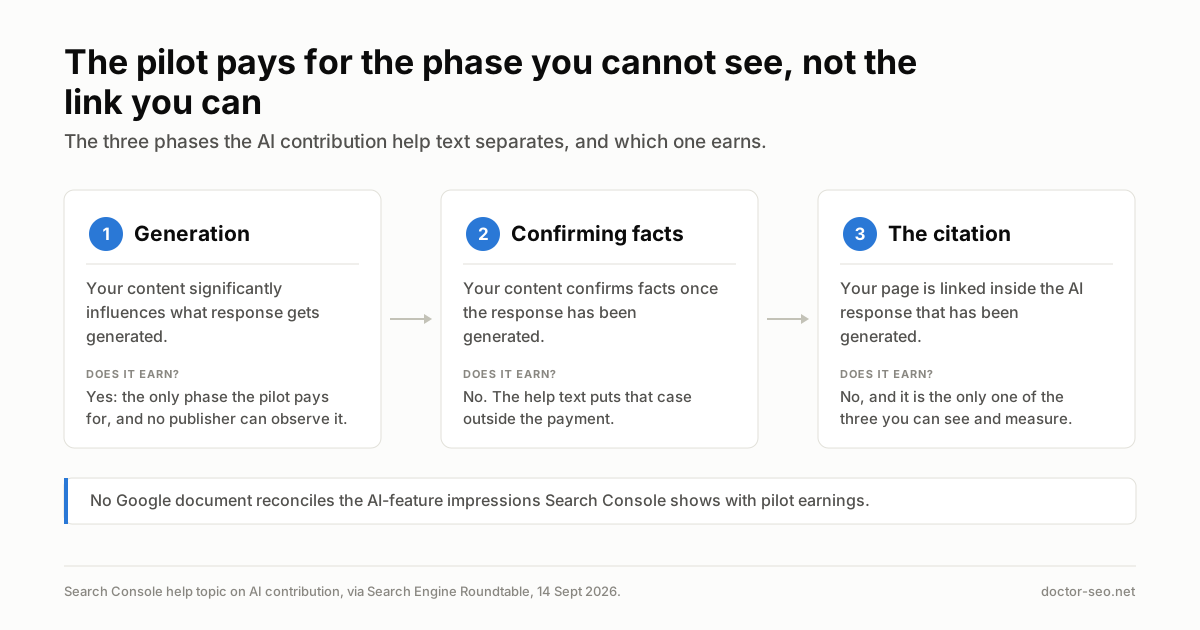
Google is paying about 100 publishers for content that feeds its AI answers. The rules of the programme live in one document…
News
Google is paying ~100 publishers for AI answers. Nobody can read the rules
Google is paying about 100 publishers for content that feeds its AI answers. The rules of the programme live in one document…
 News
Google Pulled Back Spam Protection in Europe: What’s Documented and What Isn’t
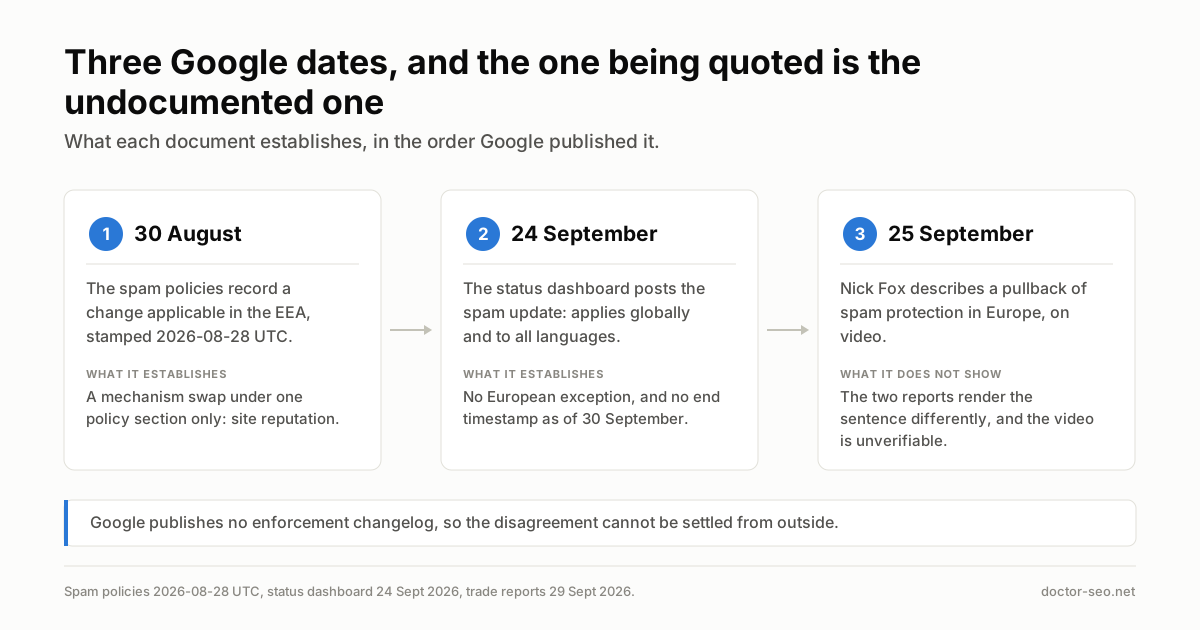
Nick Fox says Google pulled back spam protection in Europe. Four Google documents checked on 30 September 2026: only one records it,…
News
Google AI Mode Now Monitors the Web for Everyone: What Changes for Your Site
Google extended continuous AI Mode monitoring to every user. The feature appears in none of its help pages or crawler documentation, and…
News
Google Pulled Back Spam Protection in Europe: What’s Documented and What Isn’t
Nick Fox says Google pulled back spam protection in Europe. Four Google documents checked on 30 September 2026: only one records it,…
News
Google AI Mode Now Monitors the Web for Everyone: What Changes for Your Site
Google extended continuous AI Mode monitoring to every user. The feature appears in none of its help pages or crawler documentation, and…
 SEO Trends
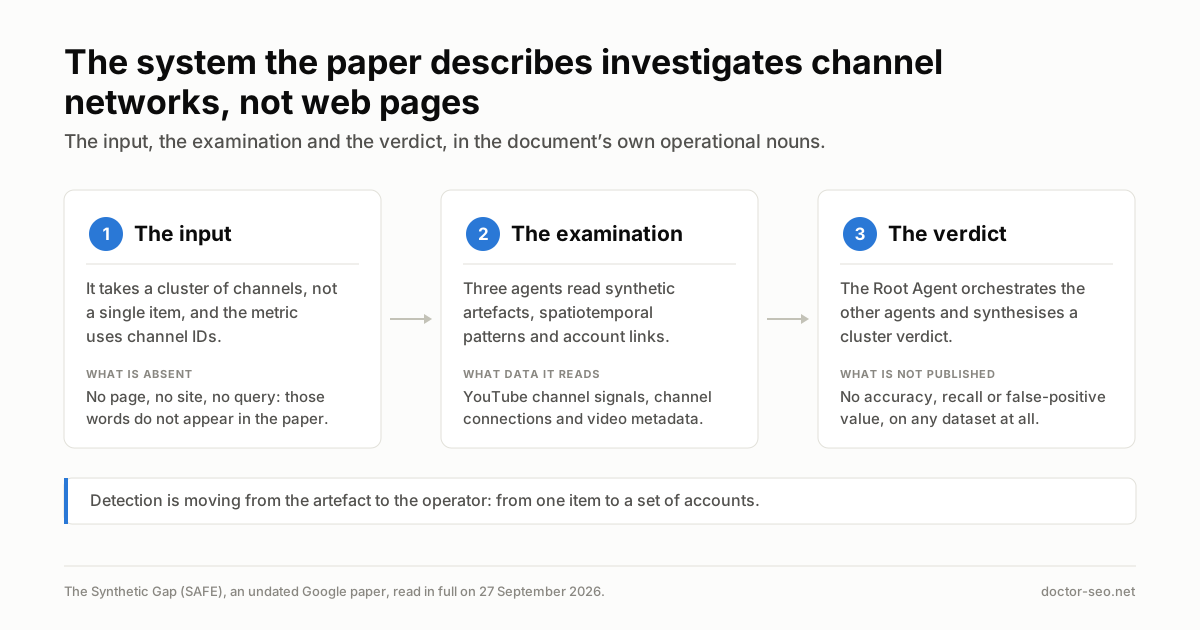
Google’s SAFE Paper Is About YouTube, Not Search Rankings
Google published SAFE, a multi-agent forensic system for “AI slop”. The paper is about YouTube channels, not Search, and it carries no…
SEO Trends
Google’s SAFE Paper Is About YouTube, Not Search Rankings
Google published SAFE, a multi-agent forensic system for “AI slop”. The paper is about YouTube channels, not Search, and it carries no…
 News
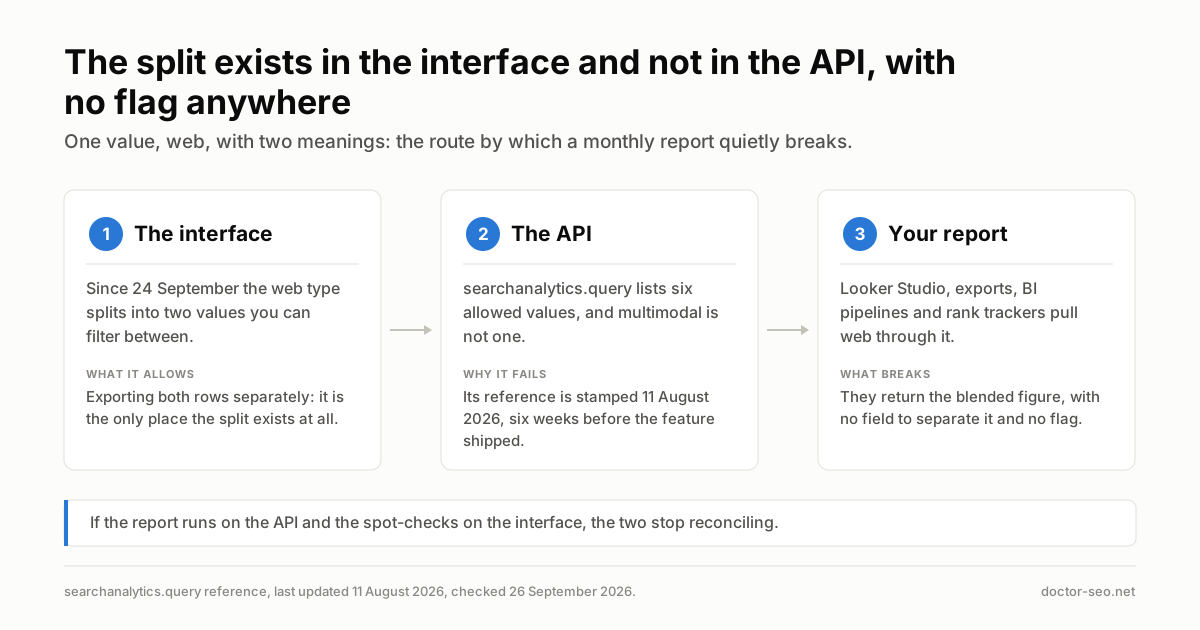
Search Console now reports multimodal search traffic
Since 24 September 2026 Search Console splits the web search type into text-based and multimodal. What it measures, what it omits, and…
News
Search Console now reports multimodal search traffic
Since 24 September 2026 Search Console splits the web search type into text-based and multimodal. What it measures, what it omits, and…
 Algorithm Updates
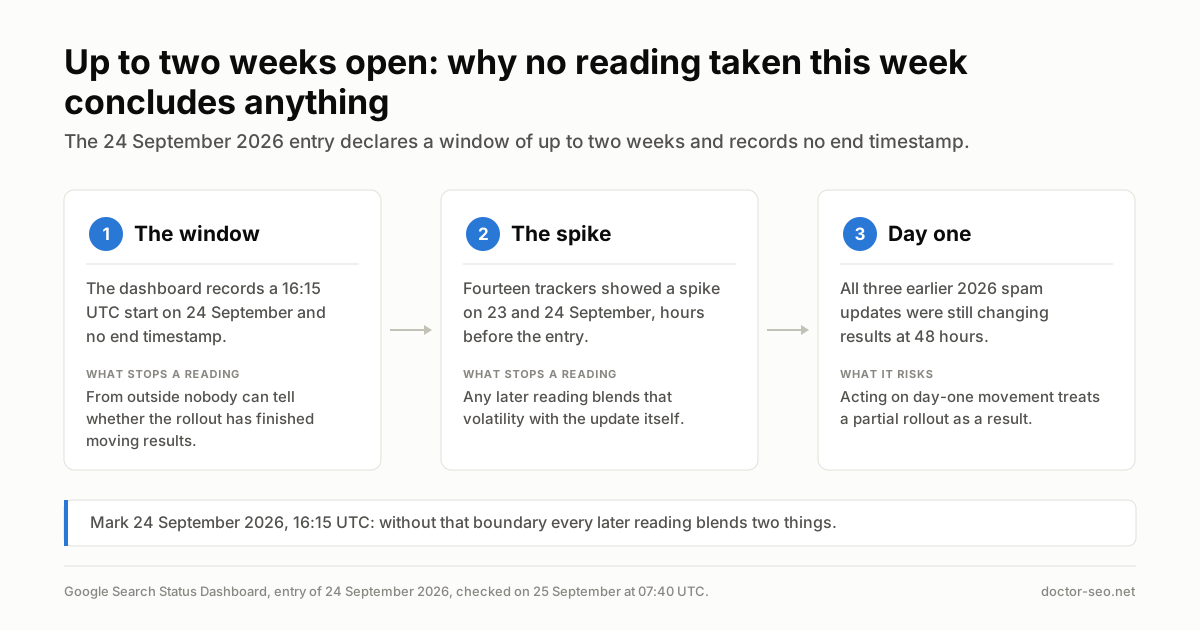
Google releases the September 2026 spam update with a two-week rollout window
Google confirmed the September 2026 spam update at 16:15 UTC on 24 September 2026. It is the first of the four spam…
Algorithm Updates
Google releases the September 2026 spam update with a two-week rollout window
Google confirmed the September 2026 spam update at 16:15 UTC on 24 September 2026. It is the first of the four spam…
 News
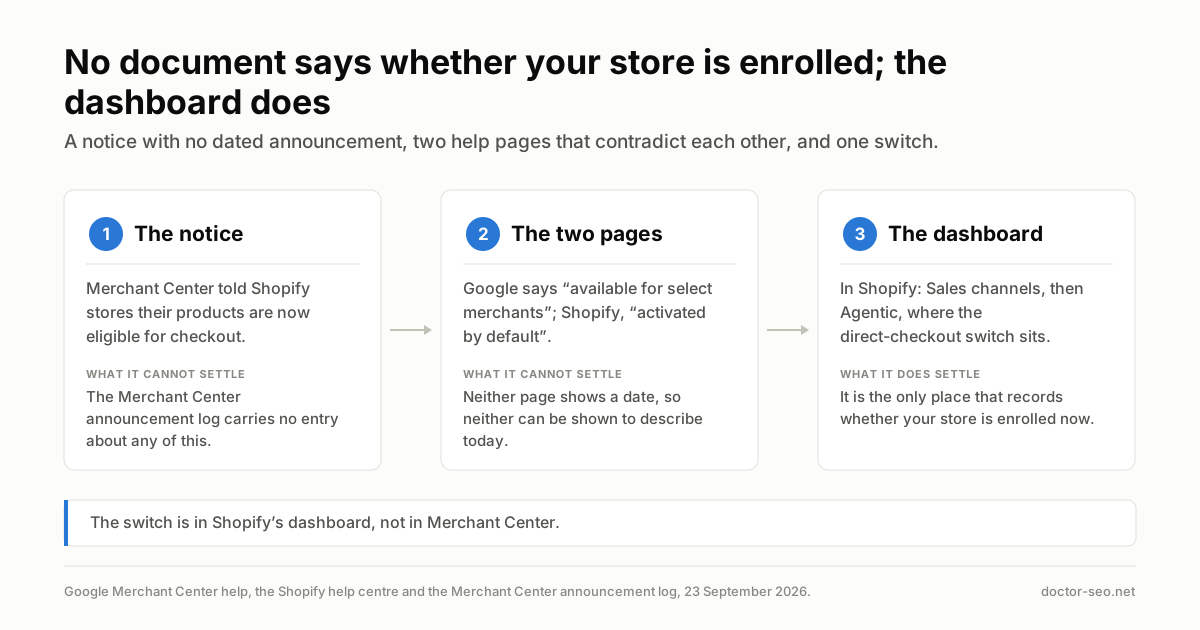
Google Turns On Native AI Checkout by Default
Eligible Shopify stores are already selling inside AI Mode and Gemini with nothing to set up. Google's help page calls it invitation-only;…
News
Google Turns On Native AI Checkout by Default
Eligible Shopify stores are already selling inside AI Mode and Gemini with nothing to set up. Google's help page calls it invitation-only;…
SEO Trends
Google Read Out Its Own Crawl and Index Timings
Gary Illyes presented Google internal crawling, indexing and serving timings in Barcelona. Google has published none of the figures, so we checked…
News
Google Now Tells You to Fact-Check Every Line of AI Content
Google changed two Search documentation pages on 1 October 2026: fact-check all AI content, and stop inventing authors. What changed, and what…
News
Google is paying ~100 publishers for AI answers. Nobody can read the rules
Google is paying about 100 publishers for content that feeds its AI answers. The rules of the programme live in one document…
News
Google Pulled Back Spam Protection in Europe: What’s Documented and What Isn’t
Nick Fox says Google pulled back spam protection in Europe. Four Google documents checked on 30 September 2026: only one records it,…
News
Google AI Mode Now Monitors the Web for Everyone: What Changes for Your Site
Google extended continuous AI Mode monitoring to every user. The feature appears in none of its help pages or crawler documentation, and…
SEO Trends
Google’s SAFE Paper Is About YouTube, Not Search Rankings
Google published SAFE, a multi-agent forensic system for “AI slop”. The paper is about YouTube channels, not Search, and it carries no…
News
Search Console now reports multimodal search traffic
Since 24 September 2026 Search Console splits the web search type into text-based and multimodal. What it measures, what it omits, and…
Algorithm Updates
Google releases the September 2026 spam update with a two-week rollout window
Google confirmed the September 2026 spam update at 16:15 UTC on 24 September 2026. It is the first of the four spam…
News
Google Turns On Native AI Checkout by Default
Eligible Shopify stores are already selling inside AI Mode and Gemini with nothing to set up. Google's help page calls it invitation-only;…